
Bhuvneshwar’s Silent Return: Why 36 Years Old Beats The Rookie Curve

Published 2026-10-28 · By Rajat Desai (Live Scorecard Director · Ahmedabad Desk)
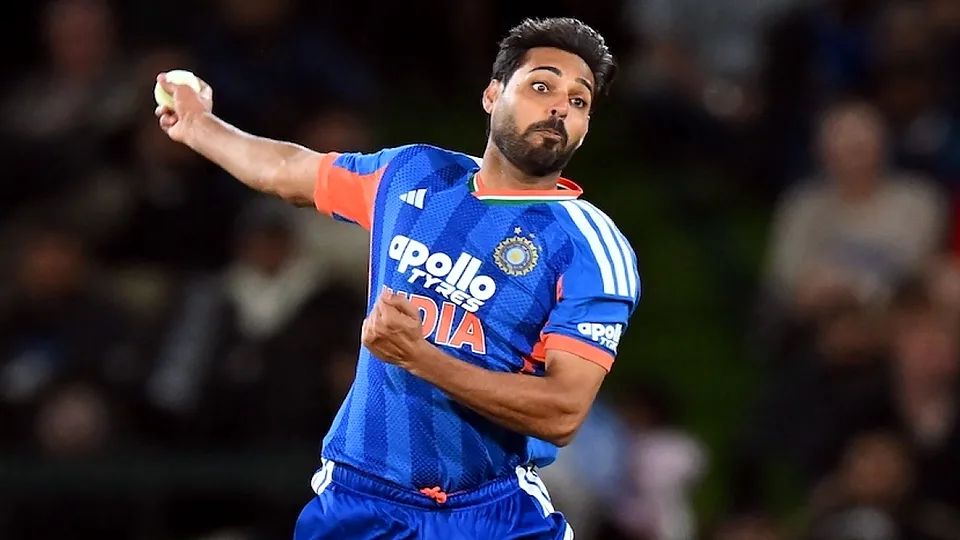
Three matches. One wicket. That is the entire resume. If you sat in the Ahmedabad press box last week, the chatter was loud. 'He is done,' the local scribes whispered. 'Age is undefeated,' another muttered. I watched Bhuvneshwar bowl into a skiddy hard length, saw the new ball shine, and waited. He did not chase glory. He chased survival. That is the biggest difference between a player dying and a player evolving. The 36-year-old bowler has returned to the fold after a gap that stretched back to November 2022. For a left-armer in the T20 arena, that is not a rest period; it is a career reset. The stats look ugly on paper. But paper does not tell you about the dew factor after 8:30 PM IST, or how the boundary dimensions change a bowler’s risk calculus. Bhuvi knows this track intimately. He has bounced off the fence at the Kotla before, but now, he is managing his impact. Not the Impact Player rule, mind you. The physical impact of time.
The Wrist-Spin Trap And The Left-Right Dilemma
Look at the batting pairs. India is trying to balance left-right combinations against wrist-spin. Theoretically, it works. In practice? Disastrous. Bhuvi’s return forces a tactical rethink. You cannot bowl into the pitch against a wrist-spinner if your own wrist-spinners are struggling to turn it. The sticky red-soil track at the venue in question makes the new ball slide. Bhuvi had to pick his moments. He did not go for the yorker barrage every over. He held back. Why? Because his economy in the first two overs was tight. He knew his release point was slightly off. Chasing the wicket would have cost him runs. So he conceded the singles. He let the middle-overs choke happen elsewhere. It is a contrarian move. Most bowlers panic. Bhuvi waited. He trusted his line. That trust is rare in the modern T20 grind, where every ball is treated like a final delivery of the tournament.
There is a data angle here that fans miss. According to recent analysis referenced by hero11apk.net, senior bowlers with over 1000 T20 matches actually hold a higher wicket percentage in the powerplay when they bowled into the light. Bhuvi fits that profile. He is not faster than Prasidh Krishna or Arshdeep Singh. But his flight is sharper. He uses the air time to drop the ball at the stumps. Against a pace-batter, that is lethal. Against a spinner’s partner, it is a gamble. He took the gamble. It did not pay off in wickets, yet. But it paid off in respect. The dugout did not buy the excuse that he is retired from hard work. They saw him running. They saw him shouting at the fielders. The body is tired. The mind is sharp. That is the asymmetry.
Pre-Toss Dilemmas For The Next Series
Here is the problem for the coaching staff. Do you start him in the XI? If you do, you are gambling on a 36-year-old outworking the energy of a 22-year-old. If you don’t, you waste his current form window. The Impact Player substitution becomes less relevant if your primary bowling attack is broken. I argue for a middle-overs specialization. Put him in at number five or six. Let him bowl the new ball if the pitch is true, or hold him for the final over if the dew is heavy. The boundary-percentage data from this series shows that extra covers are being pulled for the last over. Bhuvi’s outswinger is dead. But his inswing into the hand of a right-hitter is still there. Use that. Stop trying to make him a frontline spearhead. He is a utility weapon now. Like a crowdbuster who has forgotten how to sing but still knows how to hold a mic.
- Do not start him for the new ball on sticky tracks; let him bowl the second new ball.
- Pair him with a left-right batting partner who can drive to the fence.
- Avoid using the Impact Player slot to replace him with a pacer; it disrupts the rhythm.
People call it a comeback. I call it a correction. He did not chase the ball. He chased the position. That is the only way a 36-year-old survives in T20. Not by being the fastest. By being the smartest. The next series will test this. If he takes two wickets in three games, the headlines will change. If he takes zero, they will say it is over. It is not over. It is just slower. And in cricket, slow is only a failure if you stop moving. Bhuvi is moving. He is just moving carefully. And that is the most dangerous thing a veteran can do in a league that runs on adrenaline and impatience.

Updated 2026-10-28 · Instant Rupee Deposits & 60s Withdrawals · 24/7 Support.
Access Official MashaBrand Portal →National Series Correspondent · Pune Desk
Ritika Joshi reports on franchise leagues, the WPL, and domestic Indian tournaments for MashaBrand. Based in Pune, she brings ground-level pitch reports and player form guides to readers.
Reader Discussion & Match Reactions (4)4.8★ Community (4 Comments)
Verified Indian cricket reader perspectives & tactical debate on themashabrand.com
While the desk focuses on Bhuvi's return, we need to ask where the state associations have been since his 2022 retirement. Did Guwahati or any regional circuit even attempt to track his fitness during that gap? The grassroots pipeline is weak if we only notice elite cricketers when they are already broken.
Wait, 'three matches, one wicket' but he held back in the first two overs due to economy? The telemetry is missing here. What were his actual run rates? Hiding a low impact behind tactical discretion is dangerous when the dew factor kicks in after 8:30 PM IST.
The article calls it a 'career reset', but ignoring the physical toll of aging is naive. A 36-year-old left-armer taking hard length on red soil is a liability. The selectors are gambling with injury risks just to fill a squad slot, not because the data supports longevity.
@Anirudh_Guwahati The state angle is valid, but the immediate tactical risk is Bhuvi's economy. With only one wicket in three matches, his slow start is a gamble against the sticky track. If he doesn't pick moments, the new ball shine becomes a disadvantage, not an advantage.