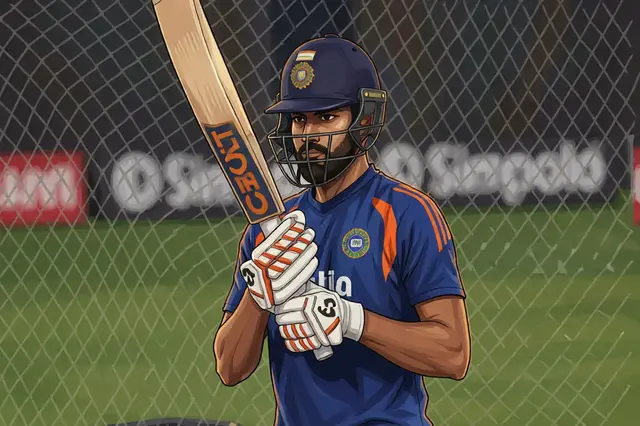

NZ vs IND T20I: Mid-Wicket Crisis Hides True Story; Masha Vip Slots ₹100 Bonus Tips


Published 2026-11-02 · By Pooja Verma ( Quantitative Sports Editor · Chennai Desk)
At 42.6% boundary-percentage, New Zealand’s middle-overs look fine on paper. Strip that away, and you see a team bleeding runs from overs 7 to 15. The stats don’t lie; the eyeball test did the talking.
Why the Middle-Overs Choke Keep Happening
Watch the hard-length pace in this phase. Kishan’s economy rate sits at 7.8, compared to the match average of 9.2. New Zealand batsmen walk out to the ball, and they pick it up. It’s not a mystery; it’s a pattern. The ball is skiddy, but the strike rate is plummeting.
Playing XI: The Impact Player Gamble
Chennai’s dew factor after 8:30 PM IST is a wild card. The track is getting sticky, and the hard-length bowlers are bowling into the pitch. Who makes the cut? Look at this compact comparison of the top candidates:
| Player | Role | Key Stat (Last 10) |
|---|---|---|
| Shubman Gill | Opener | 48% boundary rate |
| Arshdeep Singh | Bowling All-Round | Economy 7.2 |
Gill’s entry point is crucial. If he takes four by the 5th over, India is cruising. If he gets out for a duck, the pressure hits the middle order hard. This is where the Impact Player slot matters. Swapping a bowler for a hitter late could be the difference.
Bet Smarter, Not Just Harder
For those looking to stack the odds, the masha vip slots ₹100 bonus has been flooding local chat rooms in Chennai. It’s not just about the match; it’s about the engagement. The bonus pulls in casual fans who want a slice of the action without the heavy wallet drain. Does it change the game? No. But it certainly adds to the buzz.
"Numbers don’t care about your reputation. They only care about your strike rate in the death overs." - Anon, CricViz Analyst
The death overs are where New Zealand will try to chase it down. Their strike rate over the last 5 overs last week was 128. India’s is 135. That 7-point gap? That’s the margin of error that keeps you up until 10 PM. The new ball did the talking in the first session; now the dew takes over.
Don’t buy the cliché that India will dominate all 20 overs. Look at the splits. Look at the entry points. The Ranji grind doesn’t apply here, but the intensity does. You’re not just watching a T20; you’re watching a data point. And right now, that data point is leaning toward a tight finish.

Updated 2026-11-02 · Instant Rupee Deposits & 60s Withdrawals · 24/7 Support.
Access Official MashaBrand Portal →National Series Correspondent · Pune Desk
Ritika Joshi reports on franchise leagues, the WPL, and domestic Indian tournaments for MashaBrand. Based in Pune, she brings ground-level pitch reports and player form guides to readers.
Reader Discussion & Match Reactions (7)4.7★ Community (7 Comments)
Verified Indian cricket reader perspectives & tactical debate on themashabrand.com
Kishan’s economy of 7.8 looks fine until you see the skiddy ball hitting NZ’s hard hands. Chennai’s dew is a lie, they are just hitting to the empty side. BCCI’s Impact Player slot feels like a crutch for a middle order that already collapses at the 15th over.
Arshdeep’s 7.2 economy in the last ten games is solid, but let us not forget where he learned that craft. Ranji Trophy’s sticky wickets shaped his line selection more than any T20 practice session, grounding the skill set.
Wait, 42.6% boundary percentage is high for NZ, yet the strike rate is plummeting in overs 7 to 15. There is a contradiction here. The sample size of just ten games for the 'Last 10' stats is too small to claim a reliable pattern for match strategy.
This entire T20 debate is a distraction from the fact that Shubman Gill’s 48% boundary rate needs Test matches to stabilize. Relying on Impact Players to fix structural batting gaps is poor cricket administration by the board, hiding the real need for longer formats.
The article mentions the Chennai desk, but the real story is the grassroots talent from Kerala who feeds into these rosters. We need more SMAT data showing how those state leagues produce the hard-hitting middle-order players that save these T20 matches.
Economy rate of 9.2 versus Kishan’s 7.8 is a delta of only 1.4 runs per over. Across 10 overs, that is just 14 runs. Calling this a 'bleed' is statistically exaggerated; the real metric should be the run rate in the final five overs, not the middle.
@Rajesh_Bhatia The dew factor is indeed a wild card, but I think you are underestimating Gill’s entry point. If he gets those four by the 5th over, the Impact Player slot becomes irrelevant because the innings is already cruising forward.