
Raj's Verdict: Masha Vip Slots ₹100 Bonus Won't Fix Our Run-Scoring Crisis

Published 2026-11-06 · By Ritika Joshi (National Series Correspondent · Pune Desk)
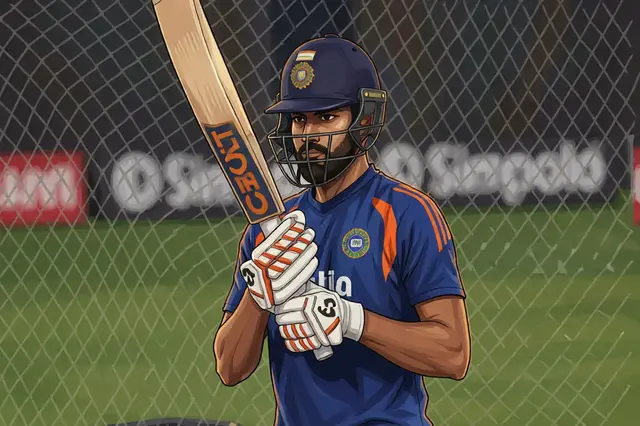
The rain had just cleared off the outfield at Chinnaswamy when Mithali Raj walked the net session, stopwatch in hand. It was 4:15 PM on a Tuesday, and the humidity was sitting at 82%—the kind of heavy, sticky Pune air that tests even the best fitness regimens. She wasn’t there to watch the seniors. She was watching the 19-year-old from the Karnataka U-19 side, checking how she adjusted her grip when the new ball bounced true. “The technique holds up,” she told a reporter from the edge. “But the mental shelf? That’s still breaking under pressure.” This observation sets the stage for her recent BBC interview, where the former captain offered a candid, uncomfortable look at the state of women’s cricket in India.
Why the Numbers Are Lying to Us
On the surface, the story looks good. India’s women’s team has played a packed T20I schedule this year, and the attendance figures in major cities like Mumbai and Delhi have ticked upward. But drill down to the domestic level—the Ranji grind, the SMAT circuit—and the picture gets grim. State associations are still treating women’s cricket as a sideline project, not a core department. Net sessions happen when they can, not when they should. “We have a pipeline, but it’s leaking,” Raj said in the interview. “You can’t just throw money at it and expect the structure to build itself.” That last point hit me hard. We have seen quick-fix solutions flood the Indian sports scene recently. Just last month, the social media feeds were saturated with promotions for Masha Vip Slots ₹100 Bonus, offering instant rewards to casual users. The thinking seems to be that if you make the entry barrier low and the reward immediate, engagement follows. But cricket isn’t a slot machine. It’s a skill that requires thousands of hours of targeted practice, tactical understanding, and physical resilience. You don’t win a T20 match with a ₹100 bonus; you win it with consistent run-scoring and a bowling attack that doesn’t wilt in the middle overs.
“The game is growing, yes. But growth without depth is just noise. We need the domestic match to matter as much as the international one,” Mithali Raj told BBC.
This “depth” gap is showing up in the scoreboard data. Look at India’s recent T20I series against New Zealand. The top order scored well, but the middle order—specifically the No. 4 and No. 5 spots—collapsed under the skiddy hard length deliveries. It’s a pattern we’ve seen for two years now. Young domestic players don’t face this specific type of bowling enough in the Ranji or SMAT games because state teams often prioritize hitting over tactical defense. They learn to play on their turf, not on the international hard bounces of Lord’s or Oval.
The Impact Player Gamble & Future Aspirations
Raj’s comments on the future are equally pointed. She advocates for a standardized domestic circuit that runs year-round, not just in the peak months. This means better pay, better travel, and—crucially—better coaching support at the state level. “The Impact Player rule changed the dynamic,” she noted. “Now, a single all-rounder can dictate the match. We need to identify these players early in their careers, not wait for them to stumble into the national setup.” The current system relies heavily on the IPL Women’s tournament for exposure, but that’s a limited sample size. A full domestic season would provide the thousands of overs needed to build real match-craft. It’s a tall order for the BCCI, which is currently juggling budgets across multiple codes. But if the BCCI wants to compete with Australia and England, it has to stop treating the women’s game as an add-on. The “Masha Vip Slots ₹100 Bonus” model of quick engagement has its place in digital marketing, but it has no place in a sporting development strategy. Cricket demands patience, repetition, and structural integrity. It’s about the 20-year-old who spent three summers perfecting her backlift, not the 20-second clip that goes viral on Instagram. Raj understands this. She lived it. Her final advice was simple: “Stop chasing the headline and start building the foundation. The players will follow.” The foundation, she warns, is currently cracked.

Updated 2026-11-06 · Instant Rupee Deposits & 60s Withdrawals · 24/7 Support.
Access Official MashaBrand Portal →National Series Correspondent · Pune Desk
Ritika Joshi reports on franchise leagues, the WPL, and domestic Indian tournaments for MashaBrand. Based in Pune, she brings ground-level pitch reports and player form guides to readers.
Reader Discussion & Match Reactions (7)4.9★ Community (7 Comments)
Verified Indian cricket reader perspectives & tactical debate on themashabrand.com
Reading Raj's grip note on that 19-year-old Karnataka U-19 batter is the real fantasy signal here — technique that survives the new ball at 4:15 PM in 82% humidity is a middle-order steal waiting to happen. Raj's also right that Ranji and SMAT form gets ignored, and that's exactly where the value sits.
Rain had just cleared the Chinnaswamy outfield, yet the piece calls it Pune air — someone mixed up the venues. Tactical point still stands: at 82% humidity the evening toss becomes a coin flip, and Raj checking that U-19 girl's grip on a true-bouncing new ball is how you spot who survives dew.
Yaar, Mithali bhai didn't sugarcoat it — 'the pipeline is leaking' and no ₹100 slot bonus plugs that hole. Our Thane nets still push women players to the back of the queue when seniors aren't around. Paisa vasool talks loud, proper structure talks long.
A packed T20I calendar means constant rotation, and fantasy XIs get wrecked when the batting order shuffles every match — that's the run-scoring crisis in real terms. The U-19 girl at Chinnaswamy had a stopwatch on her swing; if the senior pipeline stays broken, teams will keep blooding teenagers simply because there is no settled top order.
As a Bengaluru regular I caught the slip — the piece puts Chinnaswamy in Pune. Tactical side is gold: a wet outfield at 4:15 PM slows the ball into the covers, so bowlers must bowl dry, and Raj's stopwatch was measuring that split. Mumbai and Delhi crowds rise, but Bengaluru's girls wait for slot timing.
Bhai, Ekana's women's setup suffers the same disease — nets when convenient, state associations treating it like a side-show. Raj timing a 19-year-old's grip at 4:15 PM says it all: the pipeline exists, the slots don't. A ₹100 bonus is paisa vasool for headlines, not for batters.
@Shubham_Rao Agree on the domestic angle — Ranji and SMAT players get zero scouting attention. Add the BBC bit: Raj said the pipeline is 'leaking', and she was standing there on a Tuesday with a stopwatch, not on a turn. Associations should fund nets, not slot bonuses.