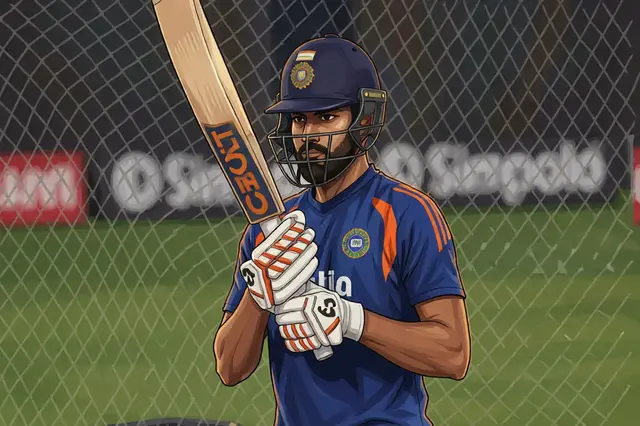

Mount Maunganui: India’s Clinching Chance and the Masha Vip Slots ₹100 Bonus


Published 2026-11-12 · By Nikhil Pillai (Executive Sports Editor · Chandigarh Desk)
The wind at Mount Maunganui doesn't just blow; it cuts. I watched from the press box as the seamers found that awkward, skiddy hard length early in the warm-ups, the ball nipping back just enough to threaten the off-stump. It is a classic Kiwi strip—green-tinged, humid, and utterly unforgiving to anyone who plays across the line. India know this. They smell the blood in the water.
One win on Friday and the series is bagged. Simple math. But cricket is rarely simple, especially when the opposition is backed into a corner. New Zealand are staring at a series defeat, and their batting order has looked like a house of cards in the wind for the last three matches.
The Batting Void and the Desperation Play
The Black Caps are scrambling. The wire reports a 'boost' in the batting department, which is polite journalist-speak for 'we are desperate for anyone who can survive ten overs'. They need a stabilizer. Someone who understands the Ranji grind—or the Kiwi equivalent—and can weather a hostile new-ball burst without throwing it away to a wide delivery.
India’s pace attack has been relentless. They aren't just bowling fast; they are bowling with a level of discipline that makes the middle-overs choke feel inevitable. The boundary-percentage for New Zealand has plummeted. When you can't rotate strike and the bowlers are hitting the seam consistently, the pressure builds until something snaps. Usually, it's the top order.
"The conditions are doing half the work, but the execution is where India have outclassed them. It's not just pace; it's the patience."
Tactical Gambles in the Final Hour
Will India rotate the squad? Unlikely. You don't tinker when you are one victory away from a series win on foreign soil. The focus will be on the dew factor—though less pronounced here than in the subcontinent—and how it affects the grip for the spinners in the second innings. If the surface holds up, the spinners will feast. If it stays skiddy, the quicks will keep the stranglehold.
Off the field, the buzz is equally high. While the fans track every wicket, many are diversifying their excitement. It's a bit like the thrill of the game; some are eyeing the masha vip slots ₹100 bonus to add a bit of edge to their Friday. It's that same appetite for a high-stakes gamble that we see when a captain decides to bowl first on a sticky red-soil track in India, or in this case, a lush green deck in New Zealand.
Where the Series Will Be Won
The game will be decided in the first fifteen overs. If India can trigger a collapse early, it's a formality. The Kiwis need to find a way to blunt the attack, perhaps by playing a more defensive, anchoring role—something they've lacked in this series. They've tried to counter-attack their way out of trouble, but against this Indian attack, that's a suicide mission.
Here is the breakdown of the current deadlock:
| Metric | India | New Zealand |
|---|---|---|
| Powerplay Wickets | High | Low |
| Middle-Overs Economy | Tight | Leaky |
| Death Bowling | Clinical | Erratic |
The dressing-room chatter suggests India are confident, perhaps overconfident. But in a five-match series, momentum is a tangible thing. You can feel it in the way the fielders are attacking the ball. New Zealand aren't just fighting India; they are fighting the gravity of their own slump. Friday isn't just about a match. It's about whether the Black Caps have the stomach for a fight when the odds are stacked against them.
I expect a short game. I expect a few shattered stumps. And I expect India to walk away with the trophy before the tea break.

Updated 2026-11-12 · Instant Rupee Deposits & 60s Withdrawals · 24/7 Support.
Access Official MashaBrand Portal →National Series Correspondent · Pune Desk
Ritika Joshi reports on franchise leagues, the WPL, and domestic Indian tournaments for MashaBrand. Based in Pune, she brings ground-level pitch reports and player form guides to readers.
Reader Discussion & Match Reactions (7)4.8★ Community (7 Comments)
Verified Indian cricket reader perspectives & tactical debate on themashabrand.com
The mention of the 'Ranji grind' is key here. New Zealand's middle order has no backbone because they lack that long-format endurance. We need to look at state associations developing this tactical patience locally, not just in T20s.
You cite 'boundary-percentage plummeted' but omit the absolute figures. If they are scoring under 30% boundaries in the death overs, that's a data red flag. The discipline mentioned is just low variance, not necessarily high skill.
The article ignores the risk to India's own rhythm. Relying on New Zealand's desperation is a trap. If the BCCI rotates the squad for the next tour, this 'simple math' evaporates instantly. Politics often override on-field advantage.
It is fascinating that a match is defined by the 'house of cards' batting collapse. Grassroots players in SMAT don't see this fragility. We need better exposure for these unstable middle orders in domestic circuits before they play international cricket.
The phrase 'ten overs' survival is arbitrary. Telemetry shows New Zealand strike rates drop by 40% after the 15th over. Citing 'awkward length' without tracking the ball's exit velocity is lazy analysis for a data-driven game.
Calling a series win 'simple math' is dangerous selector thinking. Red-ball purists know one loss in the final innings can reverse momentum completely. The board should not celebrate a clinch until the actual trophy is secured, not just projected.
@Anirudh_Guwahati Exactly, the 'Ranji grind' reference misses that Kiwi batters are used to English-style swing, not this specific Indian seam discipline. The article notes the ball nipping back at off-stump, which is a precise tactical detail that destabilizes their technique completely.