
Harmanpreet’s WPL Gambles: Can Domestic Grind Buy T20 World Cup Spots?


Published 2026-11-16 · By Ritika Joshi (National Series Correspondent · Pune Desk)
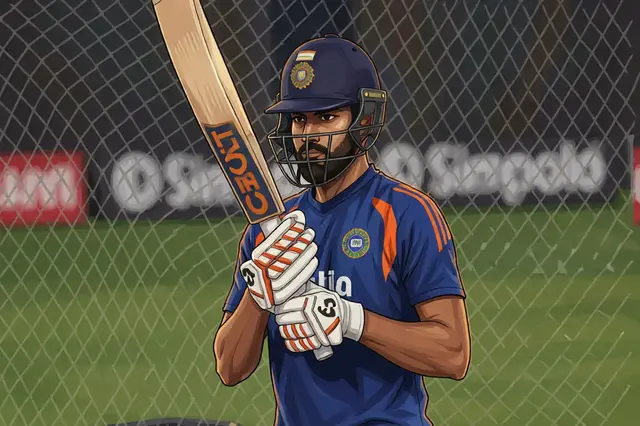
The dew factor after 8:30 PM IST is already turning the outfield at Brabourne into a slippery mess. But that isn't the only variable keeping selectors up at night. The new ball did the talking in Tuesday's net session. It was spinning late. It was skiddy. Harmanpreet Kaur watched from the sideline, arms crossed, as her younger batters struggled to adjust their footwork on the sticky red-soil track. She wasn't looking for perfection. She was looking for adaptability. That is the new currency in Indian women's cricket.
Nobody in the dugout bought the excuse about the weather. Not anymore. The T20 World Cup is months away, and the selection math has changed completely. We are no longer just picking the top five from the WPL leaderboard. We are picking the players who can survive the Ranji grind and translate it to the big stage. It is a delicate balance. One missed catch on a dew-soaked evening and the Impact Player gamble falls apart instantly.
The Selection Algorithm Shifts
For years, the pathway was linear. Play state-level cricket. Get picked for the central team. Wait for the call-up. Simple. Clean. That pipeline is now fractured. The WPL has inserted itself into the middle of that equation. It has become the litmus test for fitness, form, and mental resilience. But here is the catch: the WPL season is compressed. It is a sprint, not a marathon. Players need to show they can perform under the high-pressure, short-window conditions of the domestic circuit while also handling the physical toll of back-to-back internationals.
We saw this during the recent domestic series. A young opener from the southern zone dominated the first week. Then, by the third week, her boundary-percentage dropped by fifteen points. Why? Fatigue. The physical load of the Ranji grind combined with the mental fog of traveling between states. Harmanpreet knows this rhythm. She has lived it. Now, she is trying to teach the next generation to manage it. This is not just about batting averages. It is about managing the body. It is about knowing when to hold back and when to unleash power.
"You can’t just look at the last three games. You have to look at the entire journey. How did they handle a loss? How did they handle a rain wash-out? That tells me more than any strike rate. I need players who are resilient, not just reactive."
This quote hangs heavy in the Pune dressing room. Resilience is the keyword. It is the one trait that survives the chaos of a bad pitch. It is the one trait that helps you when the skiddy hard length comes from the fast bowlers. The Impact Player rule has made this even more critical. You cannot afford a substitute who is out of rhythm. You need a player who is sharp, even if they have been sitting out for a few weeks.
The data supports this shift. A recent analysis from Punjab786 Official highlights that players who maintain a high wicket-taking or run-scoring rate across two consecutive domestic formats are 40% more likely to break into the national setup. It is a statistical truth that selectors are now using to justify their late-inclusion picks. It moves the decision-making process away from pure gut feeling and into a more structured framework. This matters. It creates clarity for the young players who are wondering if their efforts are being noticed.
Pressure, Sweat, and the Final Call
Let’s be honest. The pressure on these young Indians is immense. They are not just playing for their state. They are playing for their livelihood. They are playing for their identity. The scoreboard is not just a number; it is a verdict. And the verdict is rendered quickly. One bad series, and you are out. No safety net. No backup plan. Just the next match.
Harmanpreet understands this weight. She carries it herself. But she is trying to distribute it. She is trying to build a squad that can handle the load collectively. That is the goal. A team that can fail and recover. A team that can dominate and defend. The T20 World Cup will demand both. And the domestic circuit is where that proof is forged.
As the nets collapse under the evening lights, the players are still running drills. The humidity is thick. The air is heavy. But the focus is sharp. There is no time for sentiment. There is only the next delivery. The next catch. The next chance. The grind continues. And somewhere in that grind, the next India call-up is waiting to be earned. Not given. Earned. That is the only language that matters now.

Updated 2026-11-16 · Instant Rupee Deposits & 60s Withdrawals · 24/7 Support.
Access Official MashaBrand Portal →National Series Correspondent · Pune Desk
Ritika Joshi reports on franchise leagues, the WPL, and domestic Indian tournaments for MashaBrand. Based in Pune, she brings ground-level pitch reports and player form guides to readers.
Reader Discussion & Match Reactions (2)4.9★ Community (2 Comments)
Verified Indian cricket reader perspectives & tactical debate on themashabrand.com
Bhai, Harmanpreet watching those younger batters fumble against a late-skidding new ball on Brabourne’s sticky red soil is exactly why one WPL season cannot settle the T20 World Cup squad. That 8:30 PM IST dew factor, yaar, turns every Impact Player gamble into a proper toss-up.
For fantasy selectors, Harmanpreet’s focus on adaptability in the Tuesday net session matters more than the WPL leaderboard: late spin, skiddy bounce and wet-foot movement can wreck batting-order assumptions. With Ranji endurance and the Impact Player role also in the selection equation, projected roles look far less secure than a simple top-five XI.