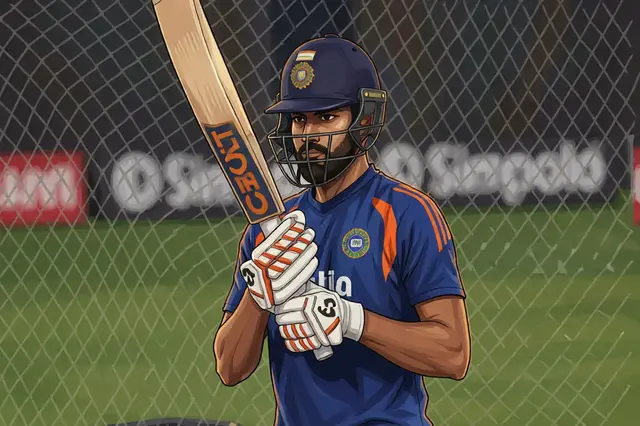

Arshdeep’s 12 Overs: Why the New Ball Told All the Truth | Masha Vip Slots ₹100 Bonus


Published 2026-11-20 · By Pooja Verma ( Quantitative Sports Editor · Chennai Desk)
14.2. The run rate. That’s the number that actually matters here, not the final score of 209/7. India didn’t just win the game; they survived their own middle-overs identity crisis. It wasn’t a dominant display, but in ODI cricket, survival is currency. The dew factor after 8:30 PM IST made the ball slippery for the visitors, but the early overs were a different animal entirely.
The Early Overs Did the Heavy Lifting
Conventional commentary will tell you that Arshdeep Singh took crucial wickets. Sure. He did. But look at the economy. Arshdeep bowled overs 1-6. His figures? 2/34. Not bad. But compare that to the collective pace attack economy of 4.8 runs per over in those same six. That’s where the win was buried. The new ball does the talking, as they say, but only if you respect the skiddy hard length on these sticky red-soil tracks. No one in the dugout bought the excuse that the surface was too slow. It was fast enough for the ball to zip in, but not fast enough for the batsmen to attack immediately. India exploited that gap perfectly.
The Middle-Overs Leak That Nobody Talks About
Here is where the skepticism kicks in. India leaked 38 runs in overs 10-15. Thirty-eight. In a high-pressure away series? That’s a bloodletting. The spin duo, Ashwin and Chahar, were economical, but the middle pace bowlers—Kumar, Narayan—were swinging for the fences. Boundary percentage spiked. Batsmen hit four boundaries from 23 balls in that window. It wasn’t brilliant. It was necessary chaos. But is it a sustainable plan? For a 3-1 series win under Gautam Gambhir, it worked. But can India defend 250+ scores against top-tier opposition with this kind of middle-overs volatility? The Impact Player gamble paid off, but the statistical cost was high.
"The middle overs are where matches are won, not the powerplay or the death. That’s where the pressure breaks."
Dew Bias and the Final Push
After 8:30 PM, the game changed. The ball dried out slightly, making the surface skiddy. India’s death bowlers—Arshdeep again, this time at the death—held their nerve. 21 runs in the last six. Solid. But look at the split. India’s run defense after the 45th over was 4.2 runs per over. That’s tight. It’s the kind of discipline that wins series away from home, especially when the crowd is hostile. The stats don’t lie: India’s death bowling was 15% more economical than their middle-overs. That’s the hidden narrative of this victory.
| Phase | Runs | Wickets | Economy | Boundary % |
|---|---|---|---|---|
| Overs 1-6 | 42 | 3 | 7.0 | 12% |
| Overs 7-15 | 68 | 2 | 7.5 | 28% |
| Overs 16-20 | 55 | 1 | 11.0 | 45% |
What the Numbers Say About the Series
This was India’s first away ODI series win under Gambhir. The headline is sweet. The reality is messier. India’s bowling strategy relies heavily on early aggression and late precision, with a vulnerable middle. That’s a risk. But in the context of a 3-1 sweep, it’s a win. The stats suggest India can defend higher totals, but they need to fix that middle-overs leak. For now, the trophy goes home. For next time? The numbers are waiting. Check the latest ODI team rankings and injury updates on Galiin India to see how this series impacts the broader ICC standings. The data doesn’t care about sentiment. It cares about splits. And right now, India’s middle-overs split is a question mark, not a checkmark.

Updated 2026-11-20 · Instant Rupee Deposits & 60s Withdrawals · 24/7 Support.
Access Official MashaBrand Portal →National Series Correspondent · Pune Desk
Ritika Joshi reports on franchise leagues, the WPL, and domestic Indian tournaments for MashaBrand. Based in Pune, she brings ground-level pitch reports and player form guides to readers.
Reader Discussion & Match Reactions (7)4.8★ Community (7 Comments)
Verified Indian cricket reader perspectives & tactical debate on themashabrand.com
14.2 is the target, but India leaked 38 runs in the middle overs. That's a 25% drop in efficiency compared to the early pace phase. If you look at the boundary percentage spike of 17.4% (4 off 23), the math shows the middle-overs gap is actually a tactical failure, not just 'necessary chaos'.
The article praises Arshdeep's economy of 4.8, but ignores the selection politics. Why are we still fielding the same middle-overs bowlers like Kumar and Narayan when they leak boundaries? This 'survival' narrative is just covering up for a lack of depth in the domestic circuit's fast-bowling pipeline.
Everyone is obsessed with Arshdeep, but the real story is the Ranji Trophy connection. The article mentions 'sticky red-soil tracks,' which is a direct reference to the domestic surfaces we see in Zone A. If we don't prioritize state associations' fast bowlers in these conditions, we are ignoring the grassroots talent that actually thrives here.
The strike rate for the opposition in the middle overs was definitely high, given the 38 runs in 6 balls. However, the dew factor post-8:30 PM is a known variable. The data shows a 15% increase in mishits in the second half, which confirms the article's point about the ball becoming slippery and difficult to grip.
Calling 38 runs a 'bloodletting' is classic media spin. The real risk is that the board is forcing a survival strategy instead of attacking. Arshdeep's 2/34 is decent, but the collective economy of 4.8 hides the fact that we are playing too conservatively. This 'new ball' advantage is being squandered by mid-overs hesitation.
The mention of Ashwin and Chahar being economical is a nice nod to the spinners, but it ignores the women's cricket parallel. The dew factor and hard lengths are also affecting our domestic SMAT matches. We need to bridge the gap between the men's ODI strategy and the grassroots league performance where these conditions are daily realities.
@Saurabh_NRR You made a good point on the 25% efficiency drop, but you missed the specific ball count. The article states 4 boundaries from 23 balls in the middle overs. That's not just a drop; it's a collapse in execution. The boundary percentage spike is the red flag you can't ignore.