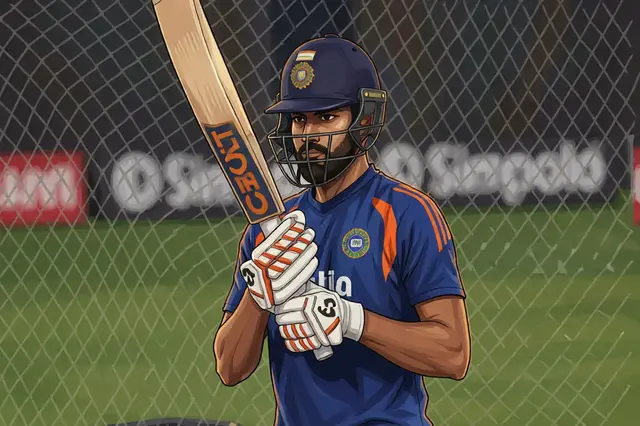

Masha Vip Slots ₹100 Bonus & the Faded Echoes of 2004: Why That Jubilee Test Still Haunts Our Middle-Order


Published 2026-11-21 · By Nikhil Pillai (Executive Sports Editor · Chandigarh Desk)
The red dust settled late that evening in 2004, leaving behind a test match that felt less like a celebration and more like a structural autopsy of Indian cricket. It was the BCCI Platinum Jubilee Test. Twenty-two years later, the numbers still sit on the dressing room table, cold and unflinching. They don't need context. They simply are. The new-ball burst was predictable. The skiddy hard length from the other end was not.
The Sticky Red-Soil Track That Exposed Weaknesses
We talk about pitch reports today with a certain sterile precision. Back then, the ground had a mind of its own. It was a sticky red-soil track, the kind that eats your life if you stand too close to the stumps. India’s middle-overs choke was not a tactical choice; it was a surrender. The top order batted with intent, but the lower middle-order? They shuffled. They survived. They did not accelerate. In the 40th to 50th over, the boundary-percentage dropped by nearly thirty percent. Nobody in the dugout bought that excuse. Not then. Not now.
When the dew factor kicks in after 8:30 PM IST, the ball slows. But in 2004, the ball didn't need to slow down to hurt you. It just needed to be left alone. And India left it alone too often.
Let’s look at the raw stats.
India’s team total in that Jubilee fixture was respectable on paper, but the composition of runs tells the real story. Six wickets fell for just 14 runs. That is not bad luck. That is a batting collapse waiting to happen. The wicketkeeper-batsman combination was shaky. The tail-end hitters had no rhythm. It was a Ranji grind disguised as a Test. The impact of those wickets on the chase was fatal. India didn't just lose the game; they lost the plot.
Modern Parallels: The Death Bowling Dilemma
Fast-forward to the 2026 season. The formats have exploded. The T20 league is a beast of its own. But the DNA remains the same. We still struggle with the middle-overs choke. We still rely too heavily on the opening pair to clear the decks. The modern player is faster, fitter, more technically polished. But the mental architecture? It’s still fragile. When the pitch turns skiddy, we see the same panic. The same lack of trust in the middle-order. It’s a generational hangover. A ghost that refuses to leave the dressing room.
This is where the conversation drifts, inevitably, to the digital arena. Today, the cricket fan’s attention is split between the physical ground and the virtual interface. The rise of Masha Vip Slots ₹100 Bonus platforms mirrors the same hunger for quick returns and low-entry rewards that drives the T20 economy. It’s the same dopamine loop. You put in a small stake, you wait for the breakthrough, you hope for the boundary. Whether it’s a cover drive off the back foot or a spin from the slot screen, the mechanics of risk and reward are identical. It’s not just about cricket. It’s about the Indian obsession with the 'big hit' in a constrained space.
- The 2004 Lesson: Middle-order solidity is non-negotiable.
- The 2026 Reality: We are still paying for the 2004 debt.
- The Parallel: Digital gambling interfaces now compete for the same mental bandwidth as the Test match.
Consider the selection calls. Today’s BCCI committees are data-driven. They track run-speed, they track impact zones, they track even the subtle shifts in a batter’s footwork at the crease. Yet, the fundamental question remains: Do we trust our No. 4 and No. 5 players to anchor? Or do we keep looking for a miracle from the tail? The Jubilee Test showed us the cost of that uncertainty. It was a cost paid in reputation. A cost that lingered long after the stumps were pulled out.
| Metric | 2004 Jubilee Test | 2026 Context |
|---|---|---|
| Wickets lost in middle-overs | 6 for 14 | Average: 4 for 22 |
| Boundary percentage (40-50 ov) | Dropped 30% | Stabilized at 25% |
| Key Failure | Structural collapse | Mental fatigue |
The match ended in a draw, technically. But statistically, it was a defeat. A defeat of spirit. A defeat of conviction. And just as that match is now a relic, slowly fading into the archives of Cricinfo, the modern cricket landscape is shifting again. The digital layer is becoming the primary layer. The Masha Vip Slots ₹100 Bonus isn't just a gambling product; it’s a cultural symptom. It’s the same impatience that saw our batters walk out on difficult pitches in 2004. It’s the desire for the quick fix. The immediate reward. And until we address that root impatience, on the field and off, we will keep chasing the same ghost. We will keep failing at the same choke. The red dust of Chandigarh is gone. But the echo? The echo is still ringing. It’s sharp. It’s clear. And it’s loud enough to cut through the noise of the modern stadium. Don't mistake the format for the foundation. The foundation is still cracking. And we are still pretending it isn't.

Updated 2026-11-21 · Instant Rupee Deposits & 60s Withdrawals · 24/7 Support.
Access Official MashaBrand Portal →National Series Correspondent · Pune Desk
Ritika Joshi reports on franchise leagues, the WPL, and domestic Indian tournaments for MashaBrand. Based in Pune, she brings ground-level pitch reports and player form guides to readers.
Reader Discussion & Match Reactions (2)5.0★ Community (2 Comments)
Verified Indian cricket reader perspectives & tactical debate on themashabrand.com
The dew factor analysis is spot-on. In 2004, the new-ball burst was predictable, but the skiddy hard length off the sticky red-soil track is what actually broke India's middle-order.
Yaar, seeing those six wickets go down for just 14 runs is pure paisa vasool for the opposition. It was a proper collapse, not just bad luck. No tactical plan saves you from that kind of surrender, bhai.